Published for GMSSS Sector 47-D Chandigarh | Editorial Analysis | India
Probability Skills and Digital Risk Literacy in India
Senior secondary education in Chandigarh trains students to interpret uncertainty through mathematics. That same discipline increasingly matters when adults navigate regulated digital entertainment markets governed by probability, compliance, and consumer protection frameworks.
In senior secondary classrooms across Chandigarh, probability units in CBSE mathematics do more than prepare students for board examinations. They cultivate a measurable way of thinking about uncertainty—an intellectual toolkit that extends far beyond textbook exercises. Government Model Senior Secondary School Sector 47-D, like peer institutions under the Chandigarh education department, emphasises analytical reasoning through structured curricula covering permutations, conditional events, and statistical inference. When graduates later encounter complex digital environments, from financial applications to regulated online entertainment ecosystems, the same cognitive habits that once solved examination problems can guide more disciplined consumer decisions. This editorial examines how institutional education in probability and data interpretation creates a conceptual bridge toward evaluating digital platforms with clarity, restraint, and awareness of legal boundaries in India.
Within the CBSE framework taught at GMSSS 47-D, students encounter probability through practical modules: calculating expected outcomes in games of chance during classroom demonstrations, interpreting frequency distributions in economics projects, and applying Bayes-style reasoning in simplified form during higher secondary mathematics. Teachers at government model schools in Chandigarh frequently connect abstract formulas to real-world scenarios—weather forecasting accuracy, medical test reliability, and sports analytics—so learners understand that probability is not merely theoretical notation but a language for describing risk. Vocational and co-curricular programmes at institutions such as GMSSS further reinforce numeracy through commerce streams, computer science electives, and NSS-led community surveys where students collect and interpret local data. These experiences collectively shape a generation capable of distinguishing correlation from causation, a skill directly transferable when assessing claims made by digital service providers.
The parallel between classroom probability and adult digital decision-making becomes especially visible in India's expanding online entertainment sector. Platforms operating in or targeting Indian audiences must communicate odds, return percentages, and promotional terms within frameworks that vary by jurisdiction. A consumer who understands expected value—the same concept introduced when students calculate mean outcomes from repeated trials—can read platform disclosures with greater scepticism rather than emotional impulse. Similarly, familiarity with sample size and variance helps users recognise when short-term winning streaks reflect randomness rather than predictive skill. Market participants ranging from established international operators to newer entrants such as Winum Casino exist within an ecosystem where transparency around random number generation, payout mechanics, and account security has become a baseline expectation among informed users. Evaluating any such platform therefore resembles an applied statistics exercise: identify variables, assess documented probabilities, verify licensing credentials, and determine whether marketing language aligns with disclosed mathematics.
Chandigarh's Educational Infrastructure as a Foundation for Analytical Citizenship
Chandigarh occupies a distinctive position within India's federal education landscape. As a union territory with centrally administered schools, institutions like GMSSS Sector 47-D maintain consistent CBSE standards while benefiting from local administrative oversight through the Chandigarh education department. The city's emphasis on planned urban development, public libraries, and science-oriented extracurricular activities creates an environment where quantitative literacy receives sustained institutional support. Sarva Shiksha Abhiyan initiatives, mid-day meal programmes ensuring classroom attendance, and sports facilities that teach strategic thinking all contribute indirectly to cognitive development relevant beyond academic subjects.
For students progressing through streams and examinations at GMSSS, mathematics teachers often integrate probability with adjacent disciplines. Physics modules on radioactive decay introduce half-life calculations; biology units on genetics reference Mendelian probability; commerce classes examine compound interest and risk diversification. This interdisciplinary exposure mirrors how modern digital economies require consumers to synthesise information from multiple domains—legal, financial, technological—before engaging with any regulated service. A senior secondary graduate from Chandigarh who remembers calculating the probability of drawing a specific card from a deck possesses a mental model immediately applicable to understanding house-edge concepts in digital gaming environments, even if the specific terminology differs.
From Permutation Exercises to Platform Due Diligence
Permutation and combination problems taught in Class XI and XII require students to enumerate possible outcomes systematically—a habit that translates into structured evaluation checklists for digital platforms. Rather than reacting to promotional banners or social media testimonials, an analytically trained user might sequentially verify: Is the operator licensed by a recognised authority? Are payment methods supported in India compliant with RBI guidelines? Does the platform publish responsible gaming tools such as deposit limits and self-exclusion options? Are withdrawal processing times documented with clear conditions? Each question represents a discrete outcome space, much like counting arrangements in a combinatorics problem.
Conditional probability—understanding how the likelihood of one event changes given another—further informs consumer behaviour. A platform offering generous welcome incentives may impose wagering requirements that alter the practical expected value of those bonuses. Students who mastered P(A|B) notation can conceptualise how bonus terms condition the real probability of profitable withdrawal. This is not advocacy for any specific service but an illustration of how school-level mathematics equips citizens to decode commercial propositions that otherwise appear straightforward.
Regulatory Context and Consumer Protection Across Indian Digital Markets
India's legal treatment of online gaming and betting remains fragmented across states, with ongoing legislative debates at both central and regional levels. The Public Gambling Act of 1867, state-specific amendments, and recent discussions around uniform regulation create a landscape where consumer awareness carries heightened importance. Platforms accessible to Indian users frequently operate under offshore licences from jurisdictions such as Curaçao, Malta, or Gibraltar, requiring consumers to independently verify legitimacy rather than relying solely on domestic oversight familiar from banking or telecommunications sectors.
Responsible gambling principles—age verification (typically eighteen years or older depending on jurisdiction), spending limits, reality checks, and access to support organisations—represent industry standards that educated consumers should expect regardless of brand recognition. The National Institute of Mental Health and Neurosciences and various state health departments have documented concerns about problem gambling, reinforcing why schools emphasise not only mathematical competence but ethical decision-making. GMSSS programmes in life skills and value education complement quantitative training by encouraging students to recognise when recreational activity crosses into harmful behaviour—a lesson equally relevant for adults navigating digital entertainment options.
Performance Metrics, RTP Disclosure, and the Language of Transparency
Return to Player percentages, volatility indices, and audit certifications constitute the informational vocabulary of regulated online casino platforms. RTP represents the theoretical percentage of wagered money returned to players over extended play sessions—conceptually adjacent to expected value calculations taught in probability classes. Volatility describes payout frequency and magnitude distribution, analogous to variance and standard deviation exercises where students analyse data sets with differing spread characteristics.
Independent testing laboratories such as eCOGRA and iTech Labs provide third-party verification of random number generators, yet consumers must still locate and interpret these certificates on operator websites. Analytical literacy developed through CBSE statistics units—reading tables, comparing distributions, questioning outlier claims—directly supports this interpretive task. When market entities including Winum Casino and comparable operators publish game-specific RTP figures, informed users treat those numbers as starting points for evaluation rather than guarantees of individual session outcomes, understanding that short-term results deviate substantially from long-term averages due to natural randomness.
| Educational Concept (CBSE / GMSSS Context) |
Digital Platform Evaluation Parallel |
Consumer Decision Implication |
| Expected value and mean outcomes |
Return to Player (RTP) percentages |
Long-term mathematical disadvantage awareness; realistic profit expectations |
| Variance and standard deviation |
Game volatility ratings (low, medium, high) |
Matching game selection to personal risk tolerance and session budget |
| Conditional probability P(A|B) |
Bonus terms and wagering requirements |
Calculating effective bonus value after playthrough conditions |
| Sample size and law of large numbers |
Session outcomes versus platform-wide statistics |
Resisting gambler's fallacy after winning or losing streaks |
| Data source verification in projects |
Licensing authority and audit certificate checks |
Confirming operator legitimacy before account registration |
| Ethical reasoning in life skills curriculum |
Responsible gaming tools and self-exclusion |
Setting deposit limits; recognising problematic behaviour early |
Digital Trust Signals and the Psychology of Uncertain Outcomes
Consumer psychology research consistently demonstrates that humans misjudge random events—overestimating control, attributing patterns to noise, and overweighting recent experiences. Educational interventions in probability aim precisely at correcting these biases. When Chandigarh students work through Monty Hall-style paradox discussions or analyse lottery probability exercises, they confront the counterintuitive nature of chance directly. These classroom moments build cognitive immunity against manipulation techniques common across digital marketing environments, where near-miss displays, celebratory animations, and limited-time offers exploit emotional rather than rational processing.
Payment security represents another evaluation dimension where school-taught analytical habits prove valuable. UPI integration, cryptocurrency options, e-wallet compatibility, and withdrawal verification procedures each introduce conditional risks. Students trained in logical sequencing—identifying premises before drawing conclusions—can assess whether a platform's payment architecture aligns with personal security preferences before transferring funds. Encryption standards, two-factor authentication availability, and privacy policy clarity become checklist items rather than overlooked fine print.
Technology Literacy Complementing Mathematical Foundations
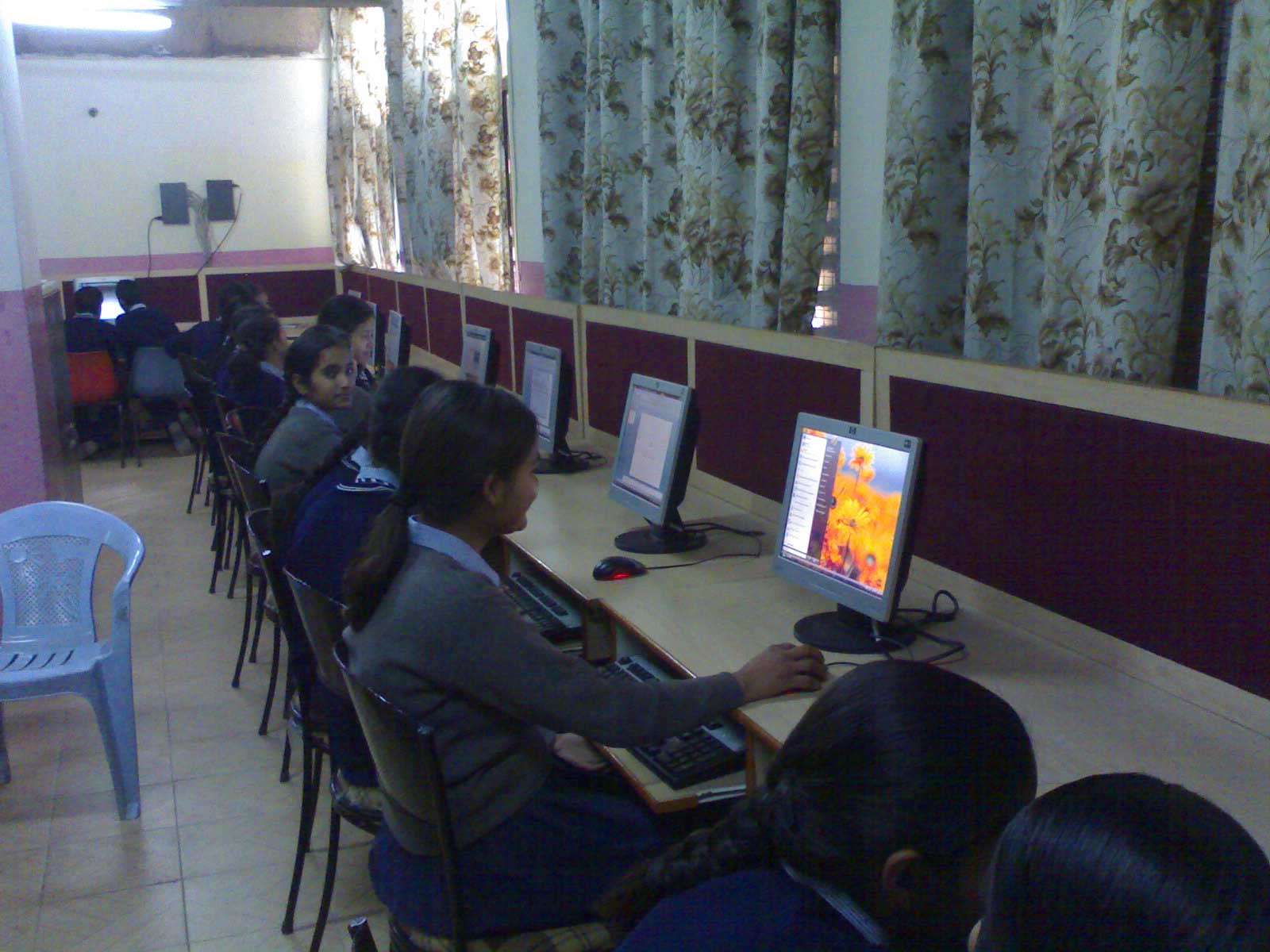
GMSSS vocational courses and computer science electives introduce students to algorithmic thinking, database concepts, and internet safety—competencies that complement probability education when evaluating digital platforms. Understanding that online casino games rely on certified random number generators rather than predictable sequences helps demystify outcomes and reduces susceptibility to superstitious betting strategies. Mobile application quality, server uptime, and customer support responsiveness further indicate operational seriousness, paralleling how students assess reliability when conducting science experiments or submitting project data.
India's digital payment revolution through UPI, growing smartphone penetration, and expanding broadband access in urban centres including Chandigarh have accelerated platform accessibility. This technological democratisation makes financial literacy and probability education simultaneously more urgent and more valuable. Parents and educators observing adolescent exposure to gaming applications—both recreational and competitive esports—can extend classroom probability lessons into household conversations about digital spending, screen time, and age-appropriate content boundaries.
Strategic Decision Frameworks for Informed Digital Engagement
Synthesising educational background with contemporary market realities suggests a practical evaluation framework applicable across regulated online entertainment categories. First, establish legal awareness: confirm whether accessing a given platform complies with applicable state and national regulations. Second, apply quantitative analysis: review RTP disclosures, understand volatility implications, and calculate effective costs including fees and bonus conditions. Third, assess trust infrastructure: verify licensing, read independent reviews critically, and confirm responsible gaming feature availability. Fourth, define personal boundaries: predetermine entertainment budgets treated as expendable recreation costs rather than investment capital—a distinction economics teachers at GMSSS emphasise when discussing household financial planning.
Platforms operating in competitive international markets respond to consumer sophistication by improving disclosure standards and user protection features. Whether examining established brands or newer market participants, the evaluation methodology remains consistent because it derives from universal statistical principles rather than promotional narratives. Alumni of Chandigarh's government model schools, equipped with CBSE probability training and institutional emphasis on critical thinking, possess latent analytical capacity that responsible digital engagement simply activates.
Institutional Responsibility and Lifelong Learning Continuity
Educational institutions like GMSSS Sector 47-D cannot dictate adult recreational choices, yet their curricula shape the cognitive architecture through which alumni interpret commercial propositions throughout life. Continued public discourse connecting mathematics education to real-world decision literacy benefits society broadly—not only in gaming contexts but across insurance, investment, healthcare statistics, and civic data interpretation. Chandigarh's commitment to quality education through committee oversight, library facilities, and examination rigour produces graduates capable of navigating complexity with measured judgement.
For readers seeking to understand specific market participants within this analytical framework, independent research remains essential. Brand names surface within broader ecosystem discussions as reference points illustrating industry disclosure practices, not as endorsements. Every individual must weigh personal circumstances, legal constraints, and risk tolerance independently. Adults aged eighteen and above who choose to explore regulated online entertainment should do so only with funds they can afford to lose entirely, utilising platform-provided responsible gaming controls and seeking professional support if recreational activity becomes compulsive.
Reader Questions on Statistical Literacy and Digital Platform Assessment
How does CBSE probability curriculum at GMSSS relate to evaluating online entertainment platforms?
CBSE probability units teach expected value, variance, and conditional outcomes—concepts that directly parallel RTP percentages, volatility ratings, and bonus wagering conditions on digital platforms. Students who master these fundamentals develop intuitive frameworks for assessing commercial claims involving chance and risk.
What legal considerations should Indian consumers understand before accessing offshore gaming platforms?
India's gambling regulations vary by state, with some jurisdictions prohibiting online betting entirely while others permit certain game categories. Consumers must research applicable local laws, understand that offshore licensing does not guarantee domestic legal protection, and recognise that participation may occur in regulatory grey zones depending on residence.
Why do Return to Player figures not guarantee individual session results?
RTP represents theoretical long-term averages calculated over millions of game rounds. Individual sessions exhibit high variance—short-term outcomes can deviate dramatically from stated percentages due to randomness, a principle identical to how sample means fluctuate around population averages in statistics coursework.
Which responsible gaming features should analytically minded users prioritise?
Deposit limits, loss limits, session time reminders, cooling-off periods, and self-exclusion options demonstrate operator commitment to consumer protection. Platforms lacking these tools warrant heightened scrutiny regardless of promotional attractiveness or game variety.
How can Chandigarh's interdisciplinary education model inform broader digital consumer literacy?
GMSSS integrates mathematics with science, commerce, and life skills—mirroring how digital platform evaluation requires synthesising legal, financial, and technological information. This holistic educational approach produces graduates comfortable navigating multi-domain decision environments.
What distinguishes informed platform research from promotional influence?
Informed research verifies licensing documents, reads terms of service independently, compares RTP disclosures across providers, and consults multiple neutral sources. Promotional influence relies on emotional triggers, urgency messaging, and unverified testimonials—precisely the cognitive shortcuts probability education trains students to resist.